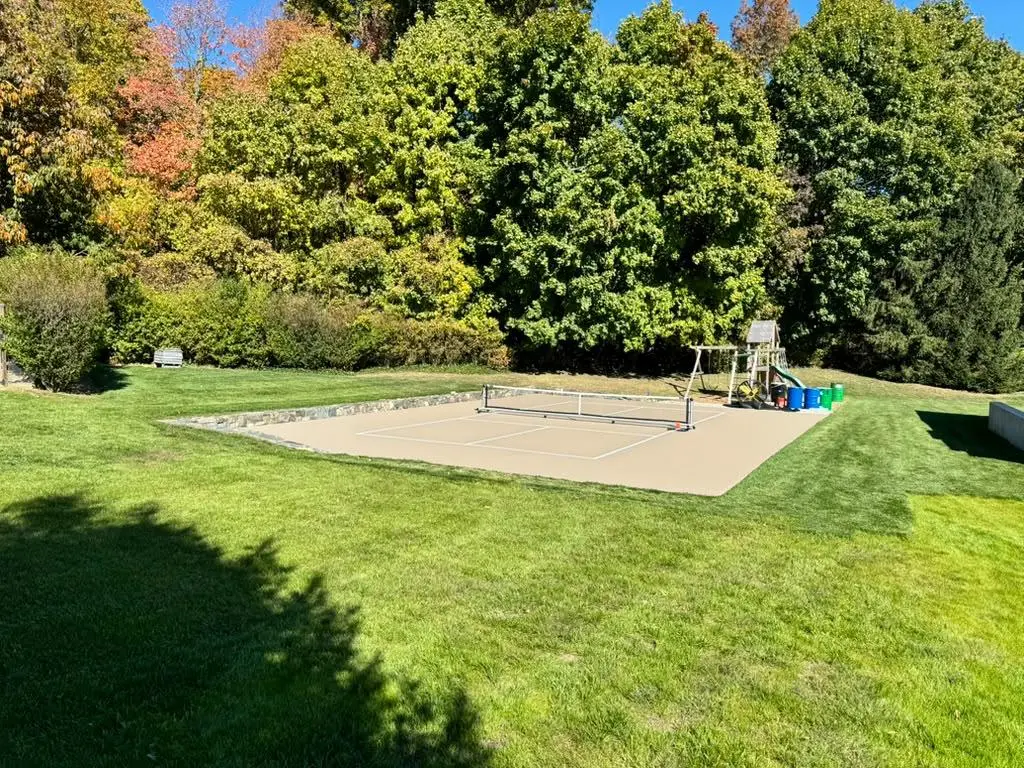
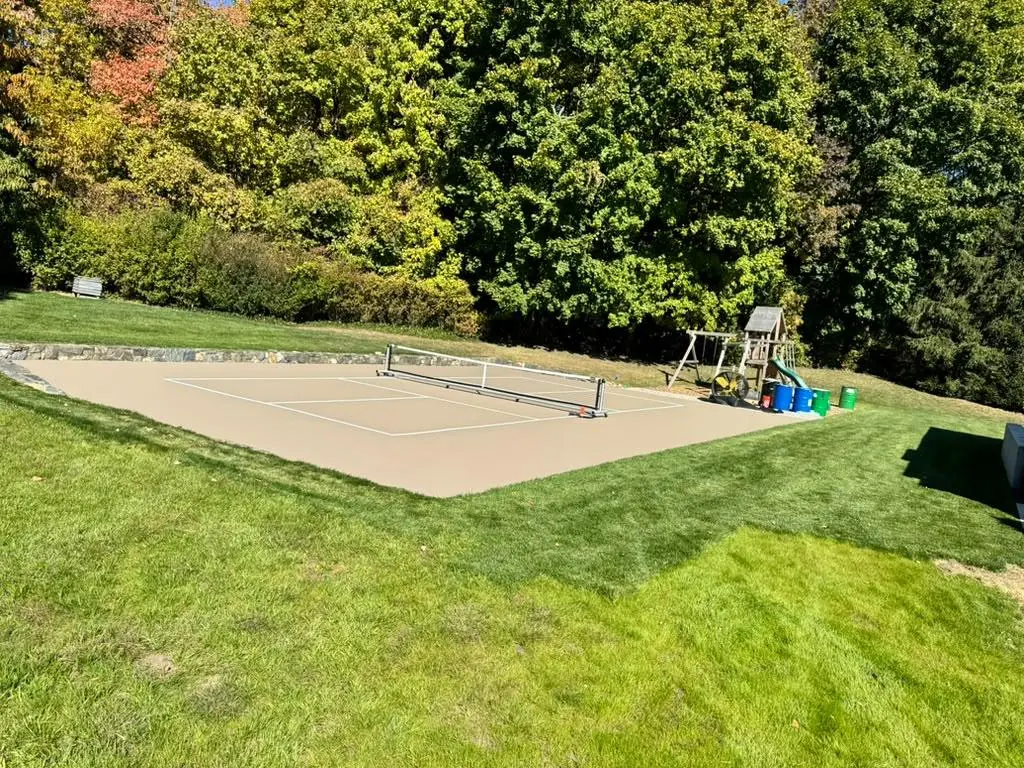
Pickleball keeps growing in popularity, and the first question almost every homeowner and club asks is simple: will it fit? The good news is that pickleball court dimensions are much smaller than a tennis court, so a backyard pickleball court is realistic on many properties in Connecticut, New York & New Jersey. The playing area is only 20 by 44 feet. But the lines are just part of the story. Players need room behind the baselines and beside the sidelines to move, and you'll want space around the court as well.
In this guide, we'll cover the official pickleball court dimensions, how much total space to plan, what it takes to fit pickleball on a tennis court, and what to think about before you build, from the base and surface to fencing and drainage. If you're planning pickleball court construction in Connecticut, New York & New Jersey, this will help you measure your yard and have a better conversation with your contractor.
Official Pickleball Court Dimensions
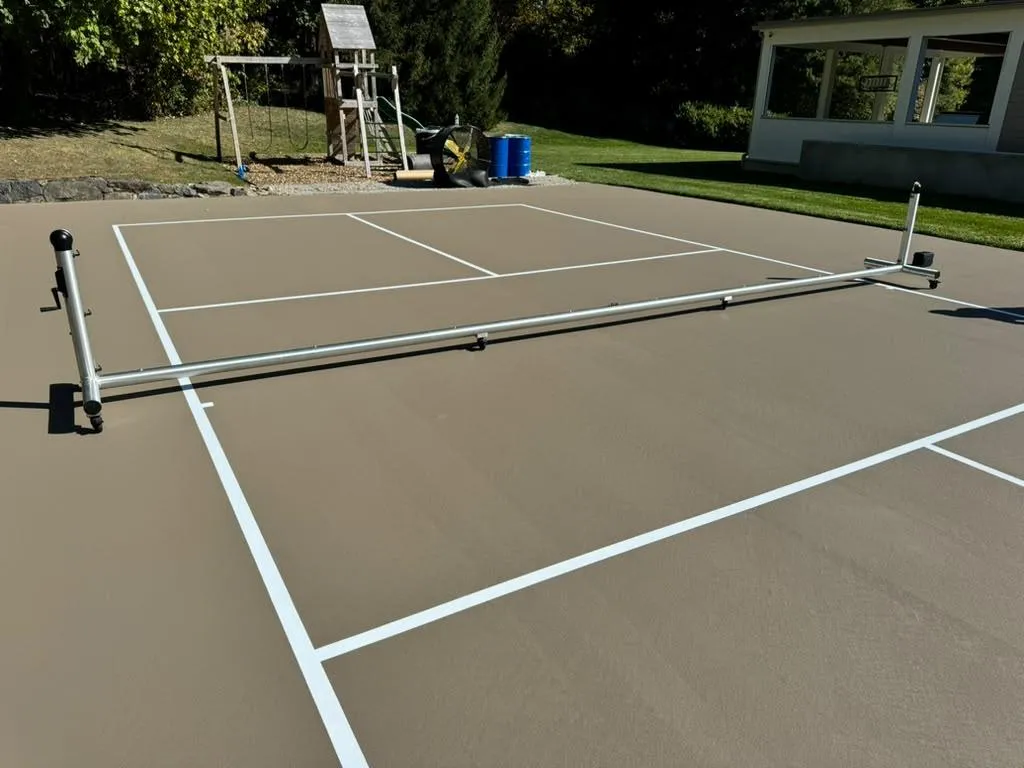
A regulation pickleball court measures 20 feet wide by 44 feet long, including the lines. The court is the same size in singles and doubles, which keeps things simple. The net sits in the middle and is 36 inches high at the sidelines and 34 inches at the center. On each side of the net, there's a 7-foot non-volley zone, better known as the kitchen, where players can't volley the ball. Behind the kitchen, a centerline divides each side into two service courts. Lines are 2 inches wide and should contrast with the court surface, so they're easy to see. These measurements come from the official rules, and building to them means your court plays the same as any court your family or members visit.
How Much Total Space You Should Plan
The playing area is only part of the footprint. Comfortable play needs open space around the lines. The recommended total area is 30 by 60 feet, which leaves room behind each baseline and along each sideline. If you have the room, 34 by 64 feet gives players even more space and is often preferred at clubs and in tournament play. On tighter lots, some homeowners build with less clearance, but cutting the space behind the baselines changes how the game feels, especially on deep shots. Also plan the space beyond the court itself: fence posts, a gate, a spot to sit between games, and a path from the house. A flat area is ideal. Sloped yards can still work, but they need more grading and base work, which adds to the project.
Can You Fit Pickleball on a Tennis Court?
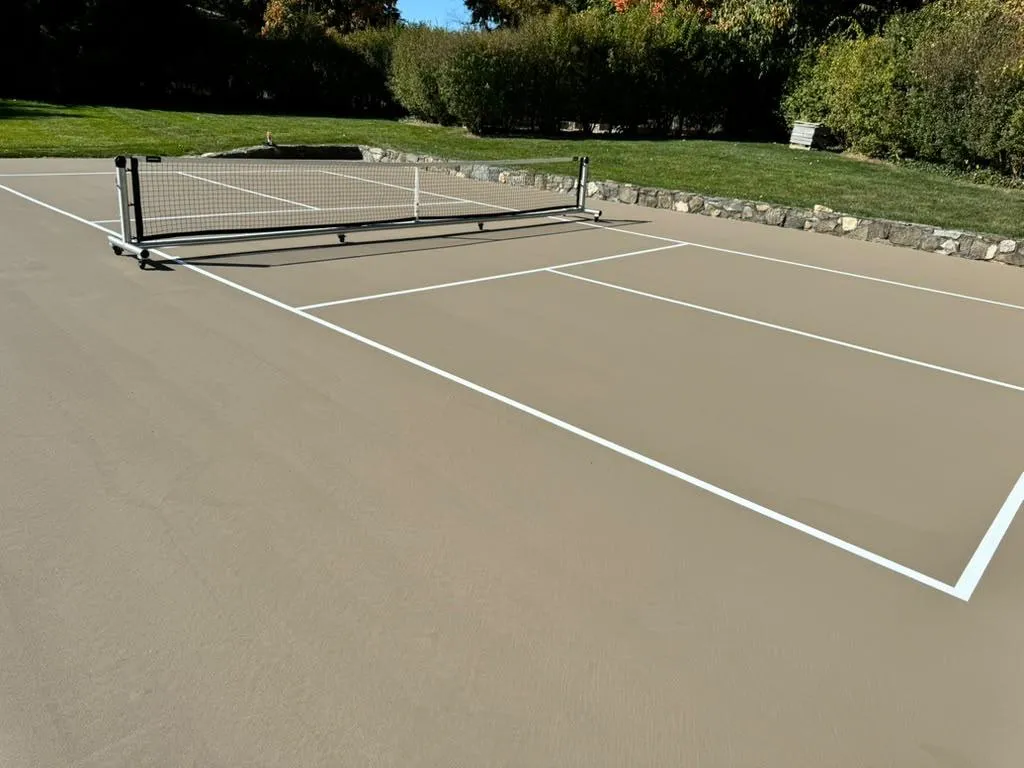
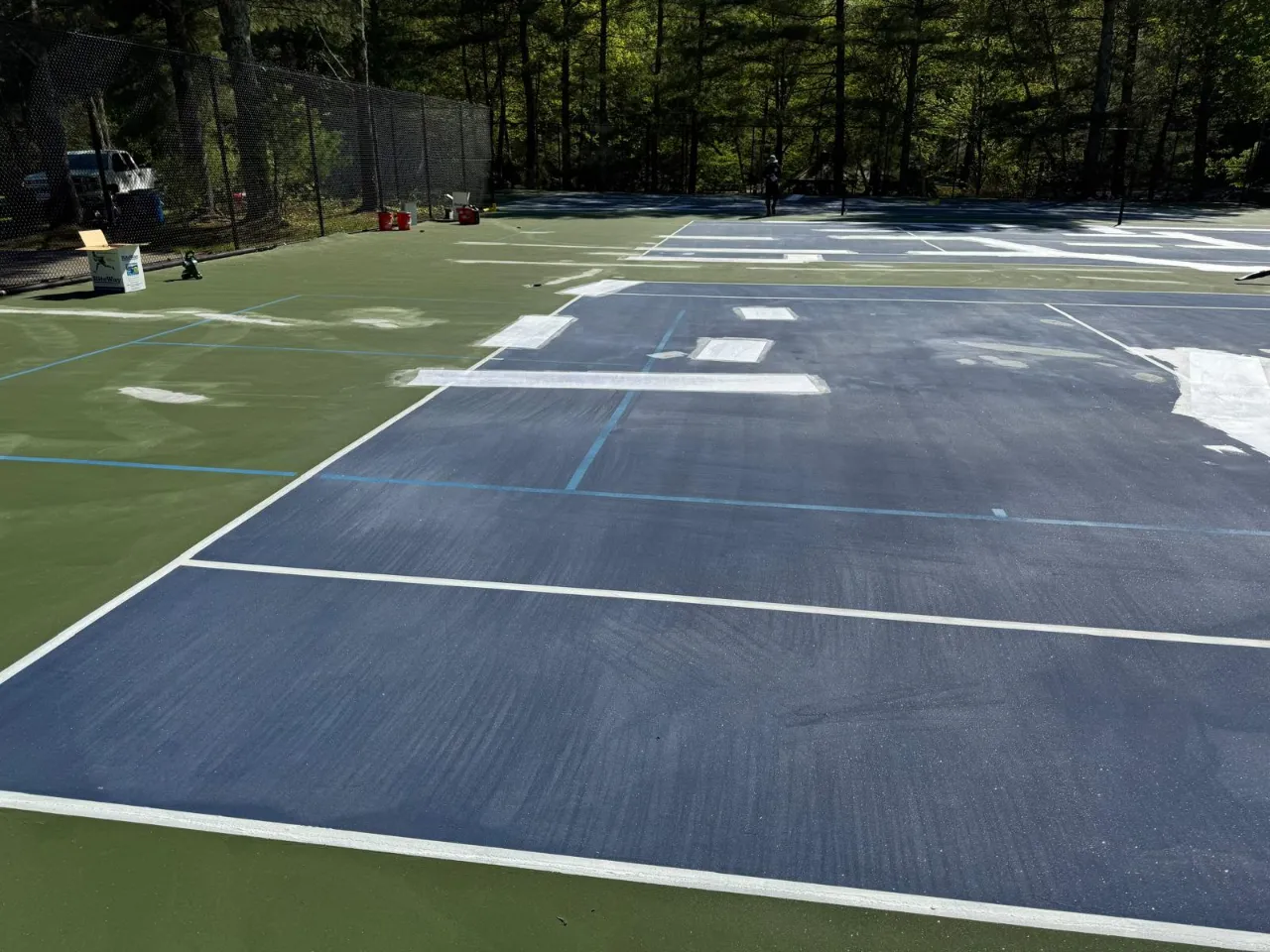
Yes, and it's one of the most popular ways to add pickleball. A standard fenced tennis court area can usually hold up to four pickleball courts, depending on the layout and the size of the fenced area. Another option is adding pickleball lines to your existing tennis court in a different color, so both games share the same surface. In that case, you'd use a portable pickleball net or set the tennis net to pickleball height. Shared lines keep costs down, but some players find the extra lines distracting. If your group plays more pickleball than tennis, dedicated courts with permanent posts and nets may be the better choice. We can review your tennis court and show you which layout works best on your property.
What to Consider Before You Build
Once you know the court fits, the next step is planning how it's built. Start with the base. A well-graded, well-drained base keeps the court level and helps prevent cracks. In Connecticut, New York & New Jersey, post-tension concrete is a strong option, because it holds up to freeze-thaw cycles. Then choose a surface that gives good grip and a steady bounce. Fencing is worth considering too, since it keeps balls on your court and out of your neighbor's yard. Think about orientation as well. A court running north to south keeps the sun out of players' eyes in the morning and evening. Finally, check local zoning rules and setbacks before you break ground. Our pickleball court installation team handles the full project, from layout to nets and fencing.