You walk onto your court in April and notice a thin line that wasn't there last fall. A few months later, it's wider, the edges are lifting, and the ball takes a strange hop every time it lands nearby. Tennis court cracks are one of the most common problems court owners in Connecticut, New York & New Jersey deal with, and they rarely fix themselves. Left alone, a small crack lets water into the base, and every winter makes it worse.
The good news is that most cracks have a clear cause. Once you know why your court is cracking, you can decide whether a patch, a resurfacing, or a new base makes sense. In this guide, we'll walk through the main causes of tennis court cracks, the types of cracks you're likely to see, the repair options that actually last, and when it's time to stop patching and rebuild. If you'd rather have someone look at it in person, our tennis court repair team in Connecticut, New York & New Jersey can inspect your court and give you a free estimate.
What Causes Tennis Court Cracks?
Almost every crack starts below the surface. The playing surface is only a thin layer, so it moves when the base under it moves. The most common causes are freeze-thaw cycles, poor drainage, a weak or thin base, and age. In Connecticut, New York & New Jersey, freeze-thaw is the big one. Water gets into small openings, freezes, expands, and pushes the base apart. When it thaws, the gap stays a little bigger than before. Repeat that many times each winter and hairline cracks turn into wide ones. Poor drainage speeds up the process, because standing water has more time to soak in. A base that wasn't compacted well or built thick enough will settle unevenly. Asphalt courts also shrink and harden as they age, which leaves them more likely to split.
Types of Cracks You'll See on a Tennis Court
Not every crack means the same thing. Hairline cracks are thin surface cracks, often caused by the coating drying out or small movements in the base. They're mostly cosmetic at first, but they can grow. Structural cracks run deeper, often in long straight lines, and they usually come back even after they're filled. On asphalt courts, you may see cracks that follow the paving seams from when the court was built. Alligator cracking, a pattern of small connected cracks, points to a base that's failing in that area. Heaving, where one side of a crack sits higher than the other, means the ground underneath is moving. Taking photos and noting where cracks show up, and whether they grow each spring, gives your contractor useful information during the inspection.
Tennis Court Crack Repair Options That Actually Last
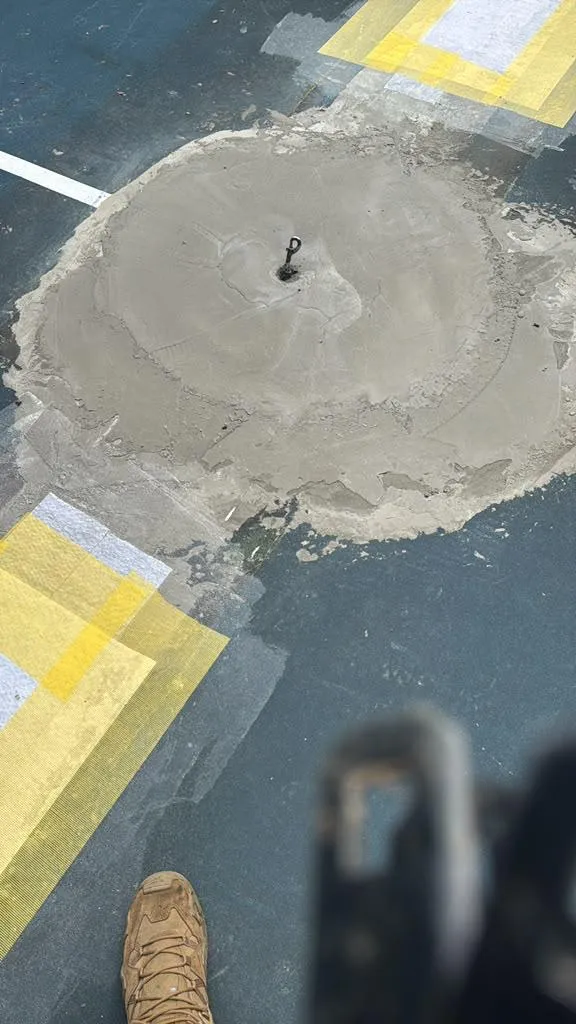
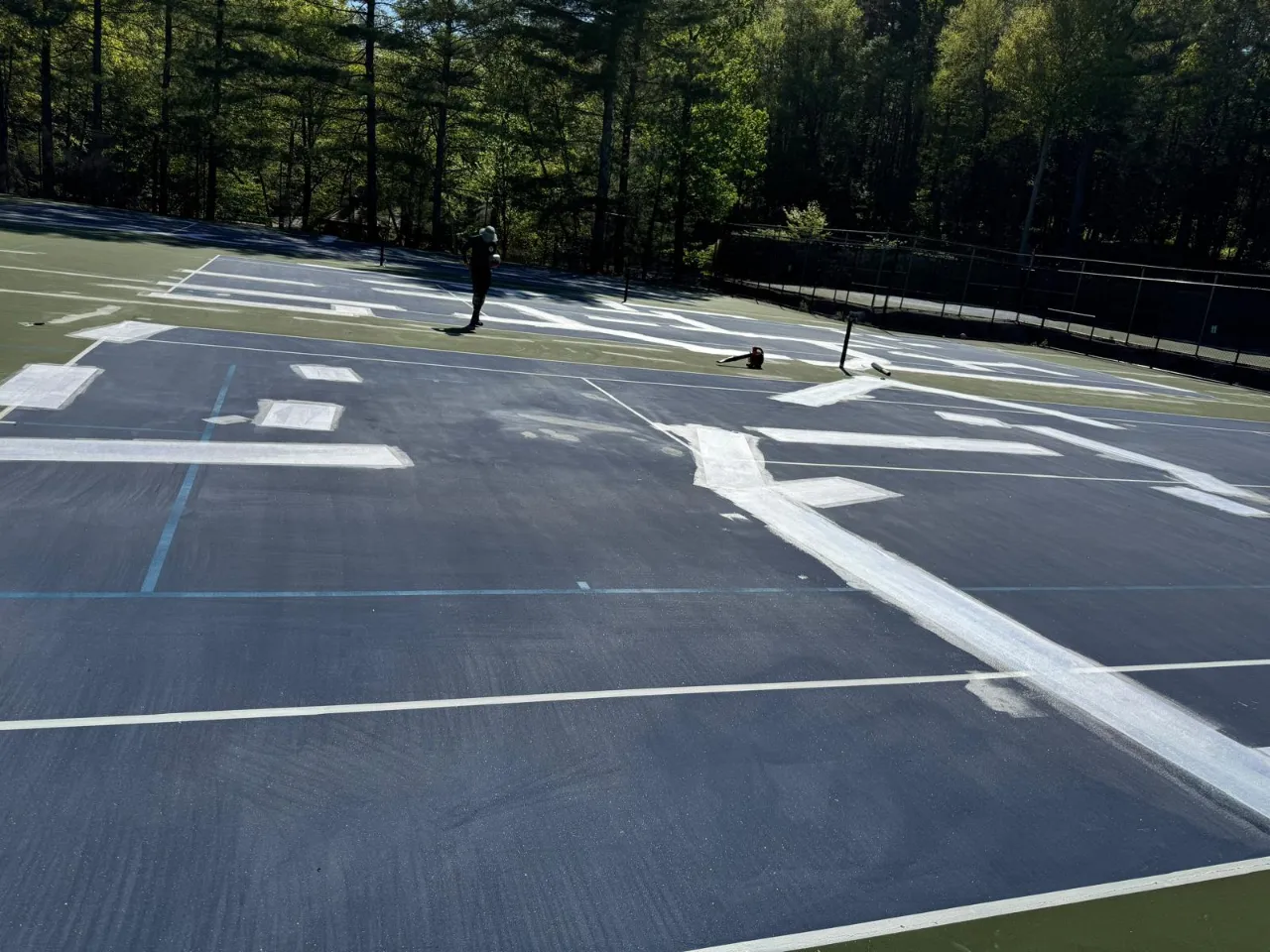
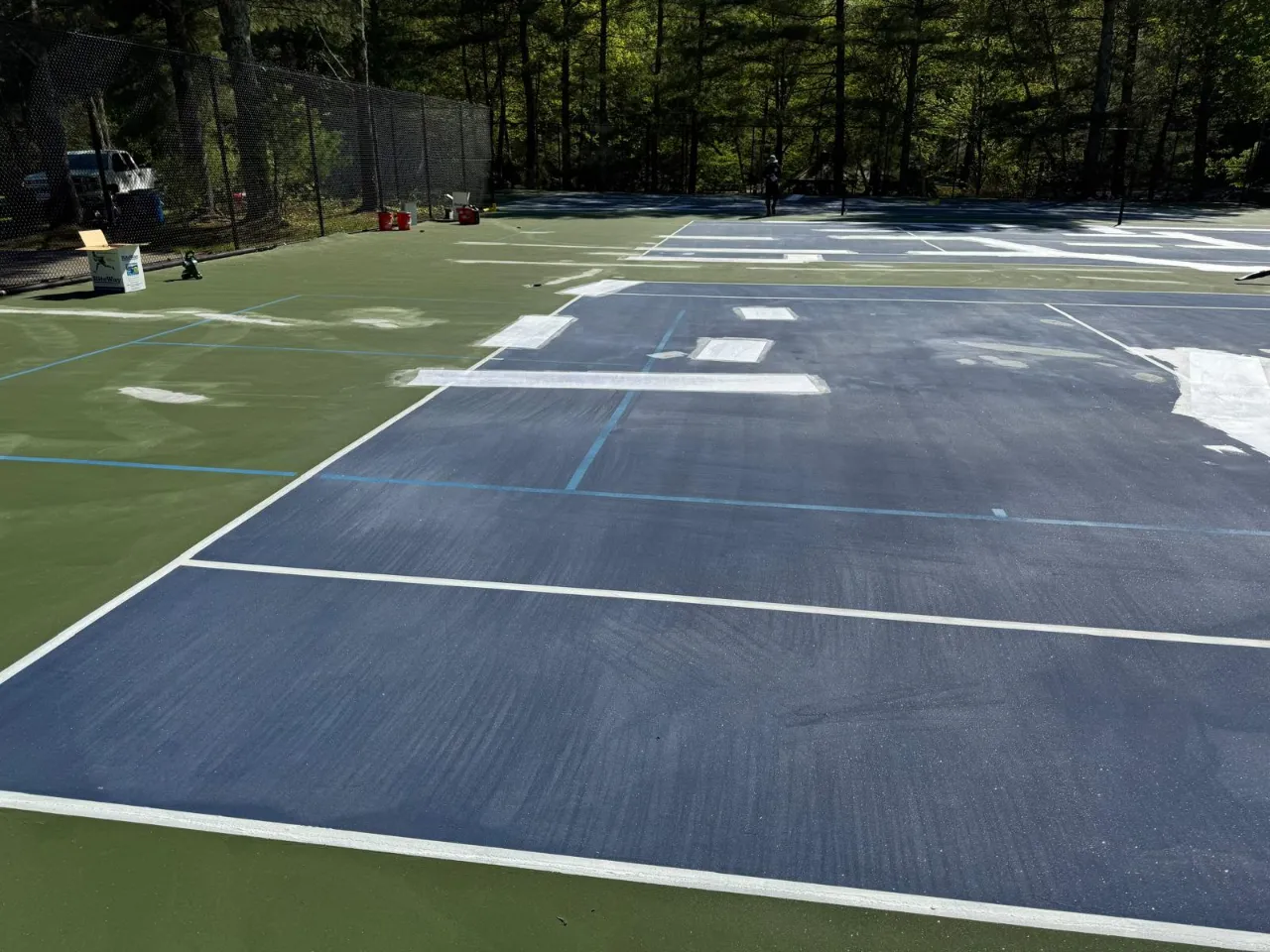
Hairline cracks can usually be cleaned out, filled with an acrylic crack filler, and covered when the court is resurfaced. It's an affordable fix that keeps water out and makes the surface look uniform again. Wider structural cracks need more. One option is a crack repair membrane or fabric system that bridges the crack under the new surface, so movement below doesn't show through as quickly. Low spots that hold water can be leveled with a patch binder before the new coating goes on. Keep in mind that most crack fillers treat the symptom, not the cause. If the base keeps moving, the crack will likely return within a few seasons. That's why a good tennis court repair starts with finding out why the court cracked in the first place, then choosing a repair that matches the problem.
When to Rebuild Instead of Repair
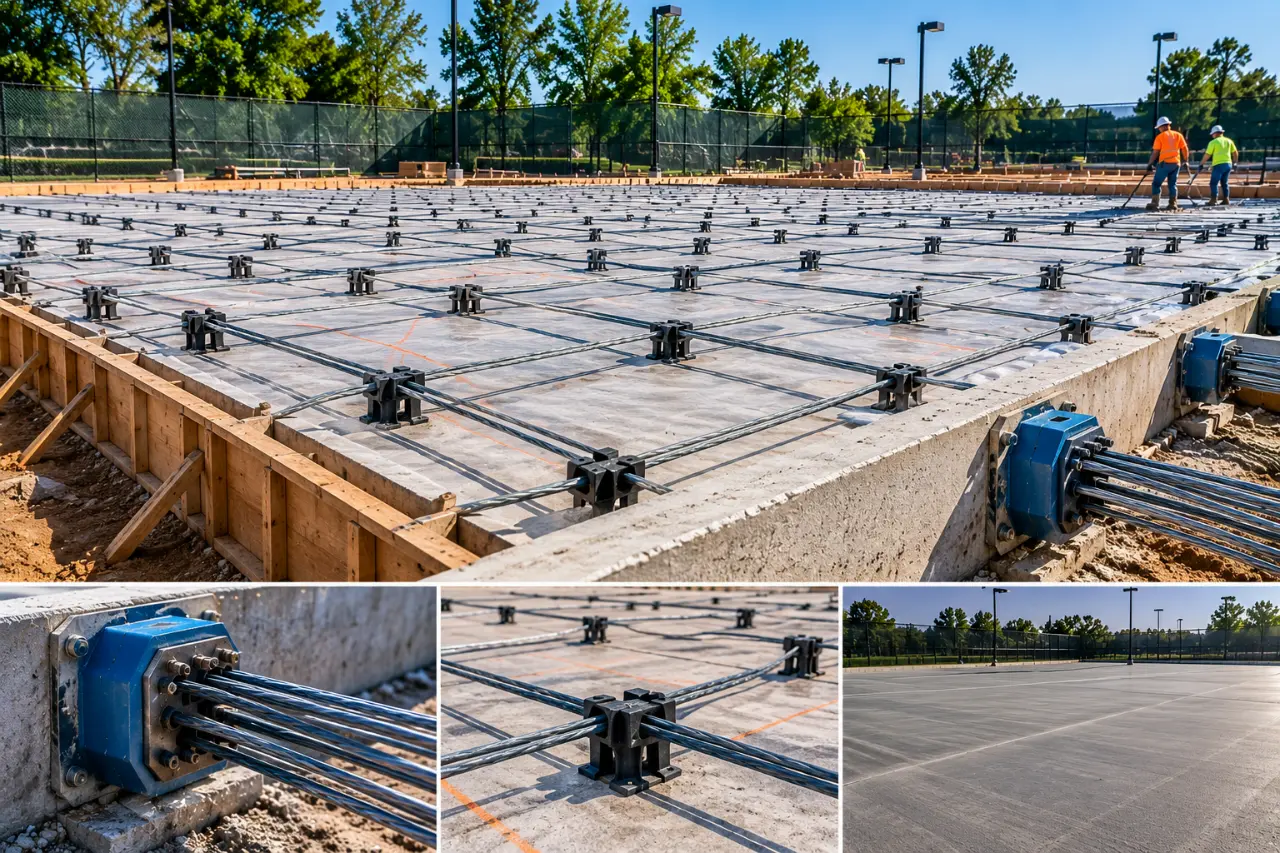
At some point, patching costs more over time than fixing the base once. You're likely there if cracks come back every spring, if there are several wide structural cracks, if large areas show alligator cracking, or if the court has heaved and no longer plays level. In those cases, rebuilding with a stronger base is the long-term answer. Post-tension concrete is a common choice in cold climates like ours. Steel cables inside the slab are tightened after the concrete cures, keeping the slab compressed so it resists cracking. It also has no control joints, so there are no seams to open up over the years. A rebuild costs more up front, but it can end the yearly cycle of crack repair. After we inspect your court, we'll tell you honestly which path makes more sense.